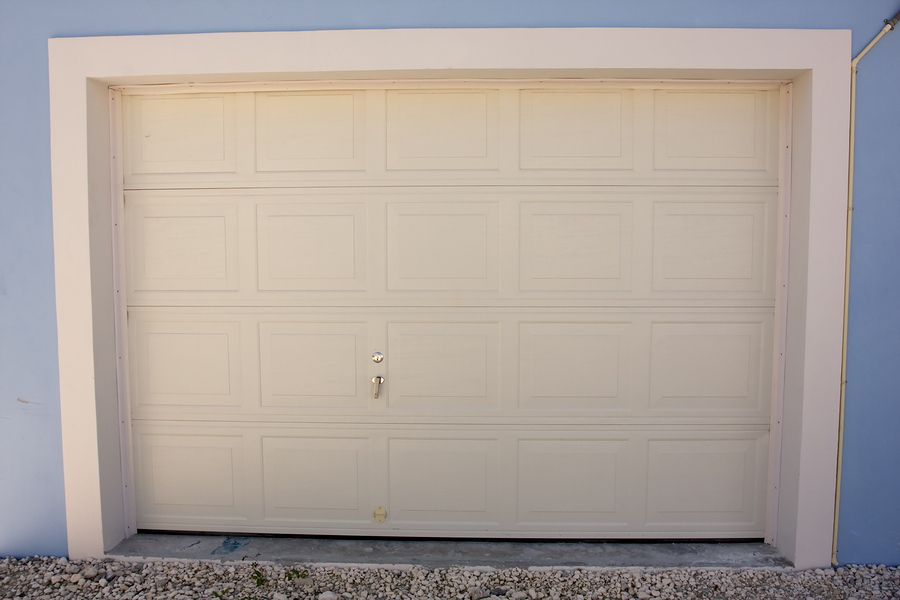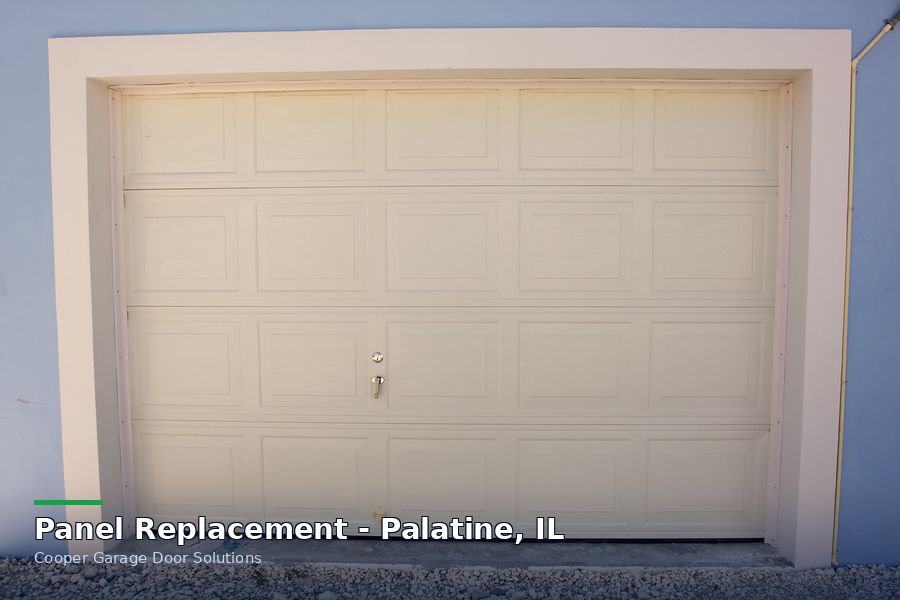
Garage Door Panel Replacement in Palatine, IL
One backed-into section does not have to mean a whole new door. When the model is still available and the rest of the door is sound, a single panel swap is a fraction of the cost.
One backed-into section does not have to mean a whole new door. When the model is still available and the rest of the door is sound, a single panel swap is a fraction of the cost.
The case for a panel swap is straightforward. The damage is confined to one or two sections, the rest of the door is structurally sound, the springs and hardware have life left in them, and the model is current enough that a matching section can still be ordered. That combination is common with impact damage, because a bumper usually only reaches the bottom section.
The bottom section is also the one that rots and rusts first, because it is the one standing in whatever water the floor drains toward. A door that is otherwise fine but has a bottom section going soft is a textbook panel replacement, and it comes with new weather seal as part of the job.
We will tell you when a panel is the wrong answer. If several sections are damaged, if the door is a discontinued model where nothing will match, or if the door is old enough that a new section will sit conspicuously against faded neighbours, the money is better spent on a replacement. A patched door that looks patched has not solved the problem you called about.
There is also a structural test. Impact hard enough to crease a section often twists the end stiles and the track behind it. If the frame of the door has moved, a fresh panel bolted into a twisted opening will not run true, and you will be back to a door that binds. We look at the whole assembly before quoting.
Matching means four things: manufacturer, panel design, gauge and colour. We identify the door from the label on the inside of an end stile, or from the hardware and section profile if the label has gone. Once we have the model, we can tell you within a day whether the section is still made, what the lead time is, and whether the colour is a current stock finish or a special order.
Colour is where honesty matters most. A door that has been in the sun for twelve years has faded, and a factory-fresh section in the same nominal colour will not match perfectly on day one. It usually settles within a year or two. If the difference would bother you, painting the whole door after the swap is an option, and we will say so rather than letting you discover it.
The door is secured and the springs are unloaded before anything comes apart. The damaged section is unbolted from its hinges and end hardware, the new one goes in, hinges and rollers are transferred or replaced, and the door is put back under tension. Because the weight of the door may have changed slightly, the springs are rechecked and rewound as needed.
We finish with the same checks as any other job: balance test, safety reverse, seal contact along the floor. If the impact that damaged the panel also bent a track or knocked a bracket loose, that gets dealt with at the same time rather than left to surface next month.
Often yes, when the model is still available and the rest of the door is sound. It is a fraction of the cost of a full replacement. Where it stops making sense is a discontinued door, multiple damaged sections, or a door old enough that a new section will stand out against the faded ones.
It will match in profile and specification. Colour depends on how much sun the door has taken. A five year old door usually matches closely, a fifteen year old one usually does not, and we will tell you which you have before you commit.
Stock sections in common colours are usually days. Special order colours and discontinued profiles take longer and occasionally cannot be sourced at all. We check availability before quoting so you are not left waiting on a promise.
A garage door has around three hundred moving parts and takes more cycles a year than almost anything else on the house. An annual service…
A commercial door that will not open is not an inconvenience, it is a stopped business. We service overhead sectional, rolling steel and…
Doors do not break at convenient times. We answer the phone around the clock for the two situations that cannot wait: a door stuck open…