Palatine, IL & Surrounding Area24/7 Emergency Service — (847) 469-9619
Garage Door Spring Repair in Palatine, IL
A snapped spring is the single most common reason a garage door stops moving. We carry matched high-cycle springs on the truck and replace them in pairs, so both sides of the door wear at the same rate from that day forward.
The opener is not what lifts your garage door. A double door weighs somewhere between one hundred and fifty and four hundred pounds, and the motor on the ceiling is rated for a fraction of that. The springs carry the weight. They store energy when the door comes down and give it back when the door goes up, which is why a properly balanced door can be lifted with one hand. The opener only guides the door along the track and holds it in place.
That is why a broken spring makes the whole system useless at once. With no counterbalance the opener is being asked to drag several hundred pounds up a vertical track, and it either stalls, strips its gear or trips the force limit. Running an opener against a broken spring is the fastest way to turn a spring bill into a spring and opener bill.
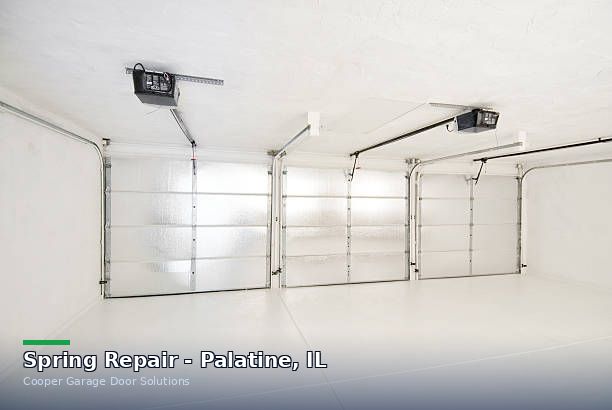
Spring Repair carried out across Palatine and the northwest suburbs.
Torsion and Extension, and Why It Matters
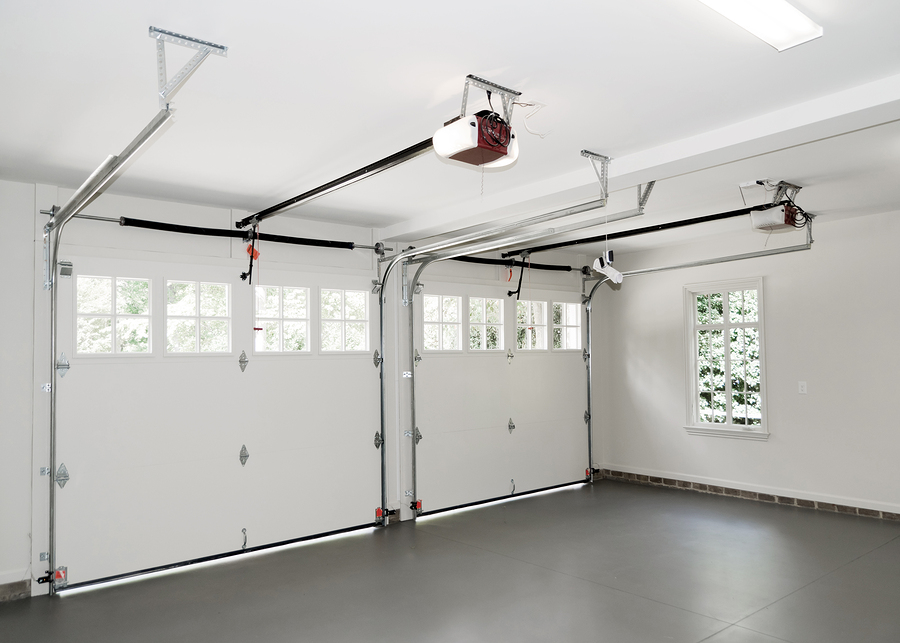
Torsion springs sit on a steel shaft above the opening and wind up as the door closes. They are the more common setup on newer doors in the northwest suburbs, they last longer and they fail more predictably. Extension springs run along the horizontal tracks on either side and stretch as the door comes down. They are usually found on older doors and on installations with limited headroom.
The distinction matters for safety. An extension spring under load will travel across the garage if it lets go, which is why safety cables running through the coil are not optional. If your door has extension springs and no containment cables, we will tell you, and fitting them takes minutes. On torsion systems the energy is contained on the shaft, but winding one without the correct bars is how people break fingers and wrists.
How We Size the Replacement
There is no universal spring. Wire diameter, inside diameter, length and wind direction all have to match the weight and travel of your specific door. We measure the spring on site rather than guessing from the door size, because two doors that look identical can be twenty percent apart in weight once you account for insulation, glass inserts and the hardware fitted to them.
We fit high-cycle springs as the default. A builder-grade spring is typically rated for around ten thousand cycles, which sounds like a lot until you count four openings a day and realise that is roughly seven years. A high-cycle spring at twice that rating costs a modest amount more on the day and usually outlives the next opener you buy. If you use the garage as your main entrance, this is the upgrade worth taking.
Every job is quoted before the work starts.
Replaced in Pairs, Then Rebalanced
When one spring on a two-spring door breaks, the other one is the same age and has done the same work. Replacing only the broken side means the second one fails within months, and you pay a second call-out charge to have somebody stand in the same spot again. We replace in pairs and price it that way.
After the springs are in, the door gets rebalanced. We disengage the opener, lift the door manually to waist height and let go. A correctly balanced door stays put. If it drifts up or sinks, the winding is adjusted until it holds. Then the safety reverse is tested, the hardware is lubricated and the travel limits on the opener are reset if they moved. Most spring calls are done in one visit inside an hour.
Signs You Need This Service
A loud bang from the garage, then a door that will not lift
A visible gap in the coil above the door, usually two inches wide
The opener strains, hums or reverses immediately after starting
The door lifts a few inches by hand and then feels impossibly heavy
One side of the door rises faster than the other
Questions We Get Asked
1 Can I replace a garage door spring myself?›
We would rather you did not. A torsion spring holds a few hundred pounds of stored energy and releases it through winding bars that have to be held correctly the entire time. Emergency rooms across the country see hand and face injuries from this exact job every year. The parts are cheap and the labour is not the expensive part of the bill, so the saving is small and the downside is permanent.
2 How long do garage door springs last?›
Springs are rated in cycles, not years. A standard spring is around ten thousand cycles, and one cycle is one full open and close. A household that opens the door four times a day gets roughly seven years out of that. A family with two drivers using the garage as the front door can burn through the same spring in three or four. High-cycle springs roughly double the number.
3 Should I replace both springs if only one broke?›
Yes, and we quote it that way as standard. Both springs were fitted on the same day and have taken the same number of cycles, so the surviving one is at the end of its life too. Changing the pair costs less than two separate visits and it keeps the door balanced evenly, which is easier on the opener.