Off-Track Garage Door Repair in Palatine, IL
A door off its track is the call we get after somebody backs into it, after a spring lets go, or after a roller finally gives up. We reseat it, fix what bent, and find out why it happened.
A door off its track is the call we get after somebody backs into it, after a spring lets go, or after a roller finally gives up. We reseat it, fix what bent, and find out why it happened.
The single most useful thing you can do before we arrive is stop. Running the opener on a door that has left the track pulls it further out, bends the track that is still good, and can tear the top section loose from its hinges. Pull the emergency release cord so the opener is disconnected, leave the door where it is, and keep cars and people out from under it.
If the door is stuck part way up, it is being held by whatever is left of the springs and cables, and that balance has already been disturbed. It is not the moment for a crowbar. This is the one repair where the damage bill is almost entirely determined by what happens in the ten minutes after it goes wrong.
Impact is the obvious one, and around here it is usually a bumper. Beyond that, the causes are all wear. A roller that has seized stops rolling and starts sliding, and eventually climbs out. A cable that snapped or jumped its drum lets one side drop and the rollers on that side pop free. Loose track brackets let the track drift away from the door until there is nothing holding the rollers in.
There is also the obstruction case. A door closed onto a bin, a bike or a stack of timber goes slack on the cables and comes off on the next cycle. Modern safety sensors catch most of that, which is one more reason to have them aligned and working rather than taped over.
We secure the door first, usually with clamps below a roller so nothing can move while we work. Then the affected section is lifted back into the track by hand and the rollers are reseated one at a time. Track that has been bent gets straightened where it can be done properly and replaced where it cannot, because a track with a kink will throw the door off again within weeks.
Once the door is back in and running, we go through the rest of the system. Rollers, hinges, bottom brackets and the cables all get inspected, because a door that came off has usually damaged something on its way out. The top section takes the worst of it and we will tell you if a hinge has torn its fixing.
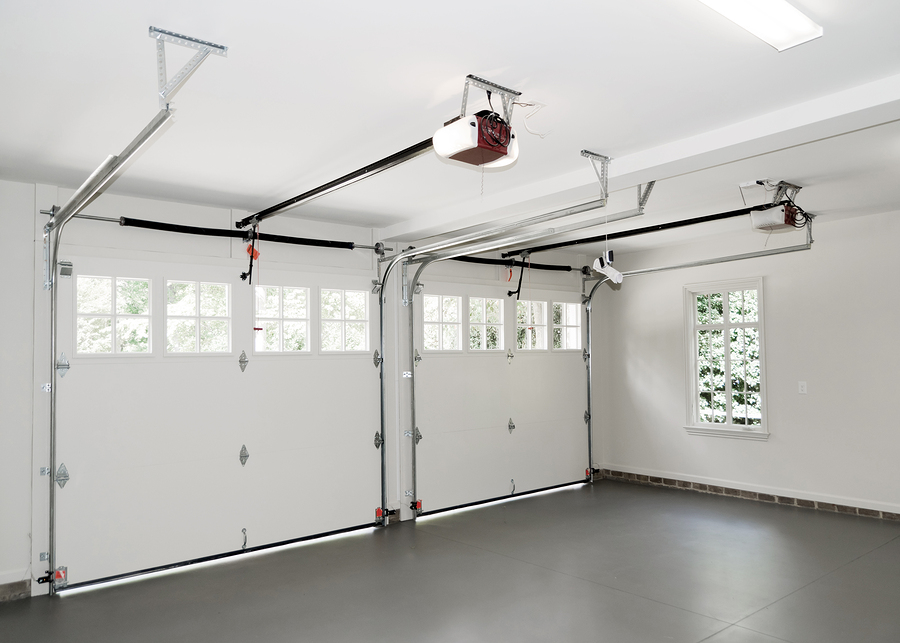
Putting the door back in the track without finding the reason it left is a repair that fails twice. If a seized roller caused it, the rest of the rollers are the same age. If a bracket worked loose, the others are worth checking. If the cause was a broken spring, that gets replaced before the door goes back into service.
We finish with a full balance check and a safety reverse test, and we are honest about the point where a door has taken too much damage to be worth repairing. A door with two crumpled sections and a twisted top rail is a replacement, and you are better off hearing that on day one.
We would rather you did not try. The door is under spring tension even when it is stuck, and the usual result of an amateur attempt is a bent track and a torn top section on top of the original problem. Clamping and reseating a door safely takes the right tools and a second pair of hands.
In most cases yes. A door off its track is treated as urgent because the garage is either standing open or completely unusable, and neither is something you want overnight. Call and we will give you a realistic window rather than an optimistic one.
Only the damaged sections in most cases. Vertical and horizontal track come in pieces, so a bent lower section can often be swapped without touching the rest. If the horizontal track has twisted along its length, that whole side is replaced.
Rollers are the cheapest part on the door and the one that changes how it sounds and feels the most. Swapping tired steel rollers for…
One backed-into section does not have to mean a whole new door. When the model is still available and the rest of the door is sound, a…
A garage door has around three hundred moving parts and takes more cycles a year than almost anything else on the house. An annual service…